- Role
- Sole Product Designer
- Timeline
- Aug 2026
Research
- Community observation
- 01Insight mapping
- Set asideInvesting
- 02Interviews
- Set asideSavings
- 03Synthesis
- Hypotheses
- Exploration
People find it challenging to identify the most efficient financial decision, whether it is investing, planning for the future, or paying off debt.
- Narrowing
Young adults can pay off debt and start saving with confidence if they have well-informed, personalized support.
- Focus
Young adults can manage their credit card usage with confidence if they have well-informed, personalized support.
I started where people discuss money openly, on r/personalfinance. I coded three threads by what people say, want, and value, and four of the eight insights pointed at the same difficulty, knowing which financial decision is the efficient one.
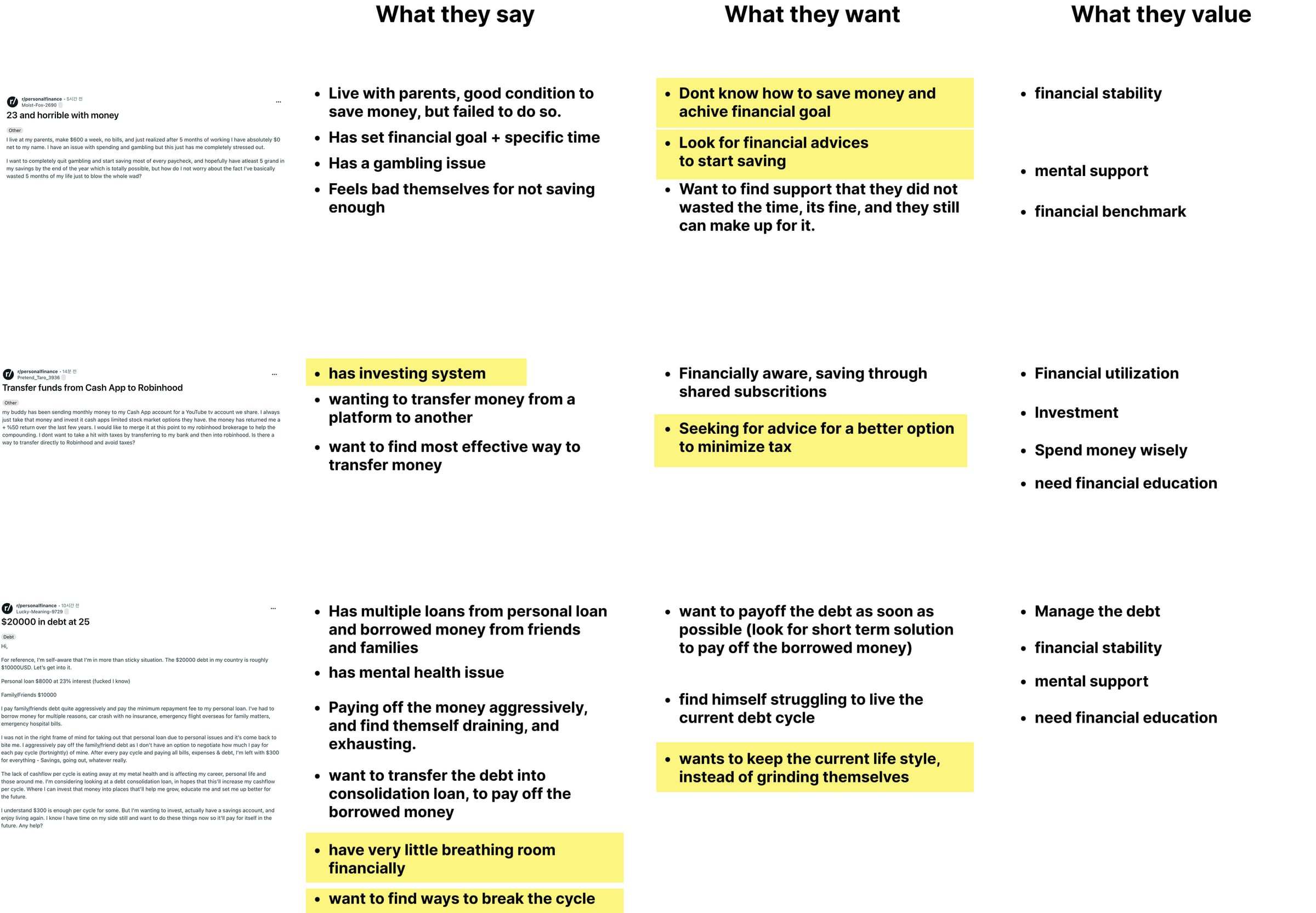
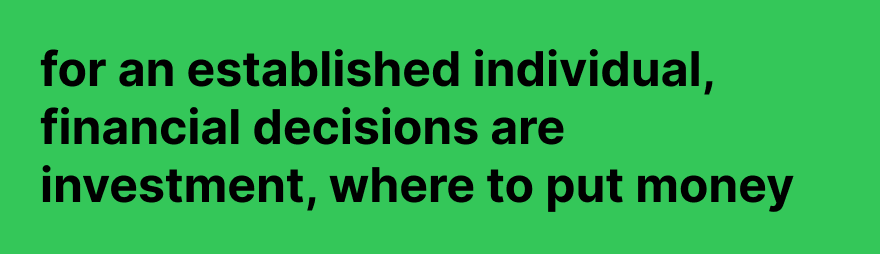
One poster, 25 and in debt, wrote that they "pay the minimum repayment fee" on a personal loan at 23 percent interest. The same habit came up again in the interviews. Four interviews with young adults at four career stages, in South Korea, California, Massachusetts, and Maryland, traced that difficulty to three gaps. People lacked information about their own situation, personalized support, and confidence. Each stage needed a different kind of support. Investing mattered to the people who were already settled, so I set it aside, and saving gave way to debt, the problem that was already costing someone money.
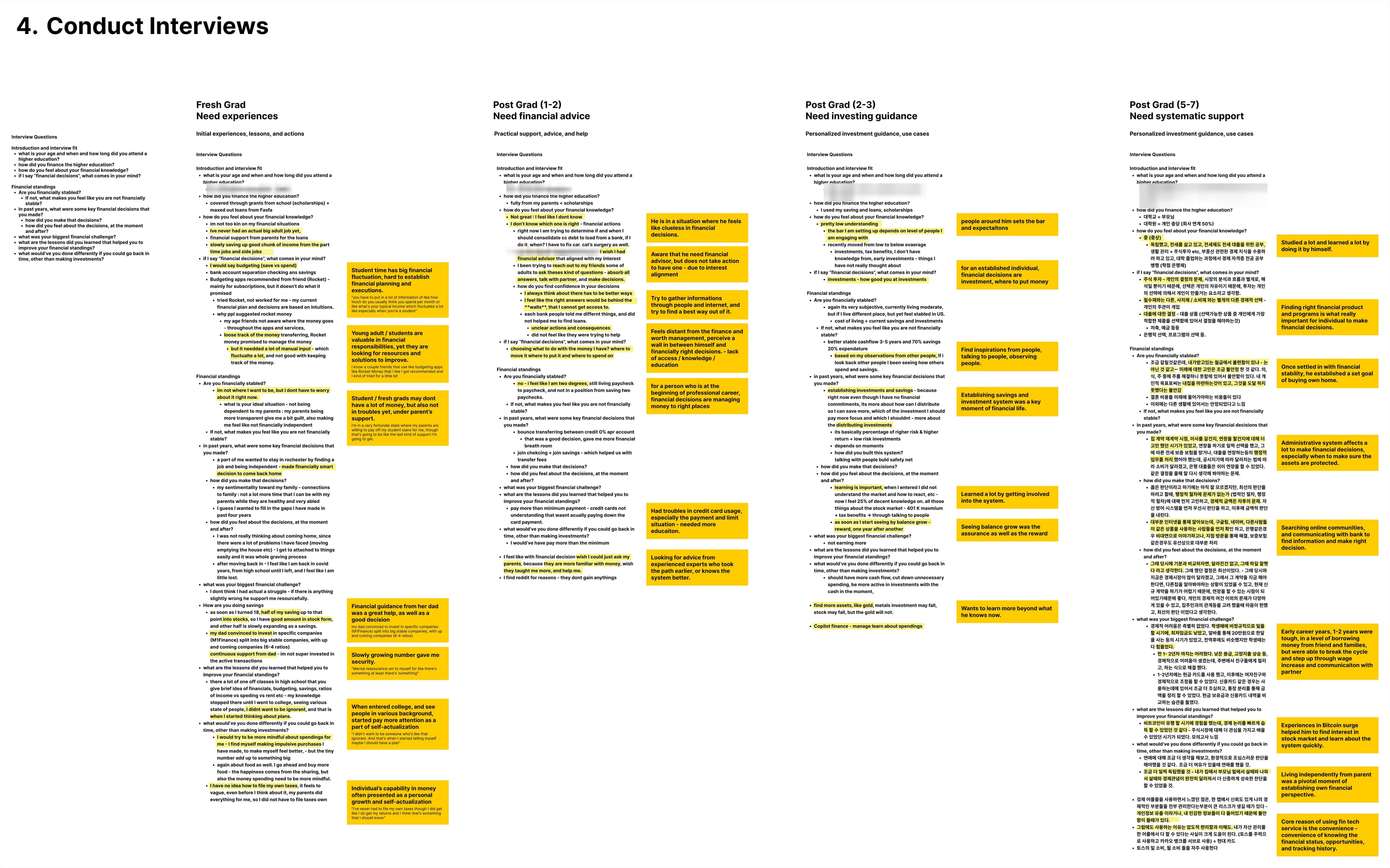
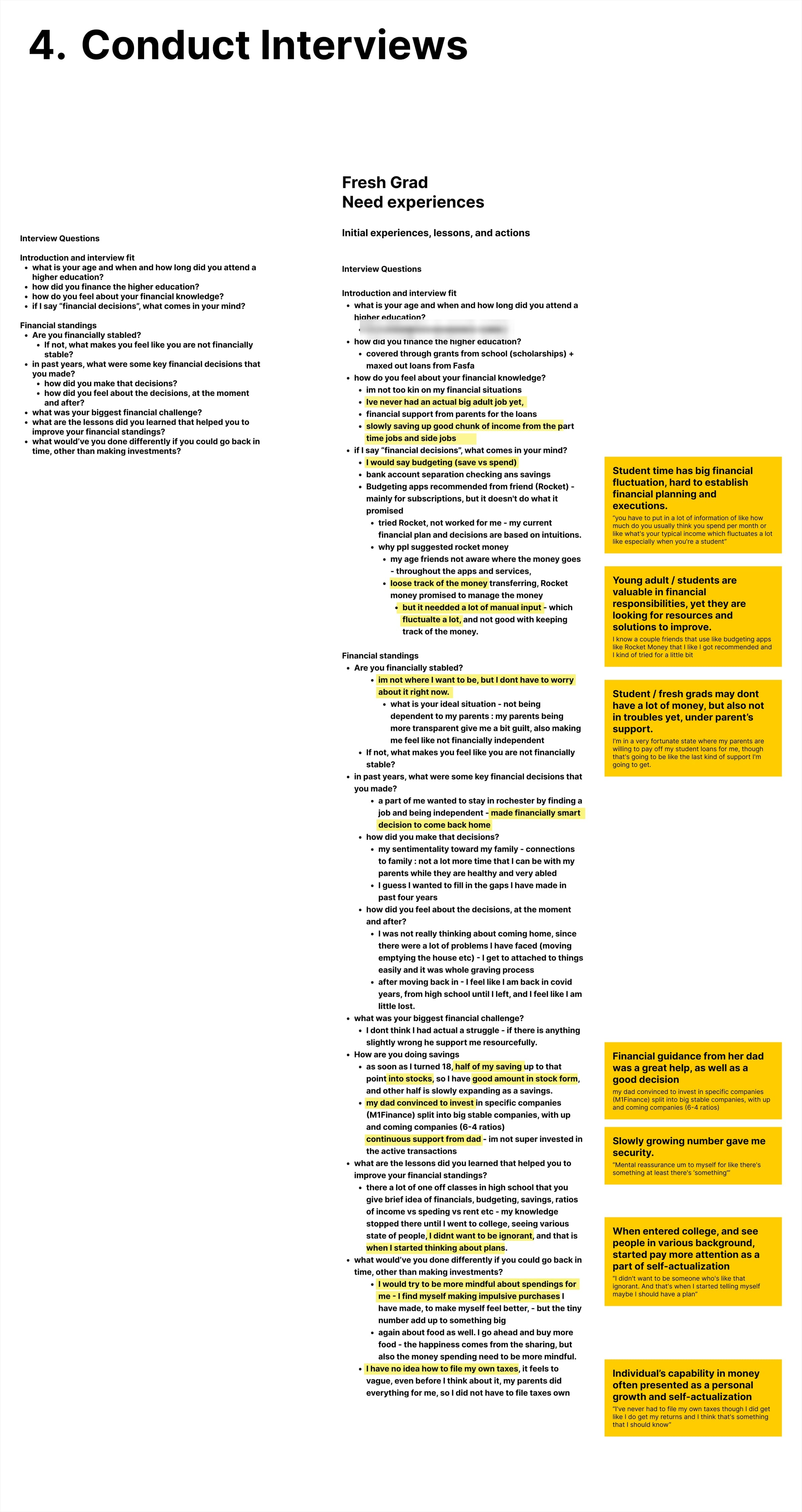
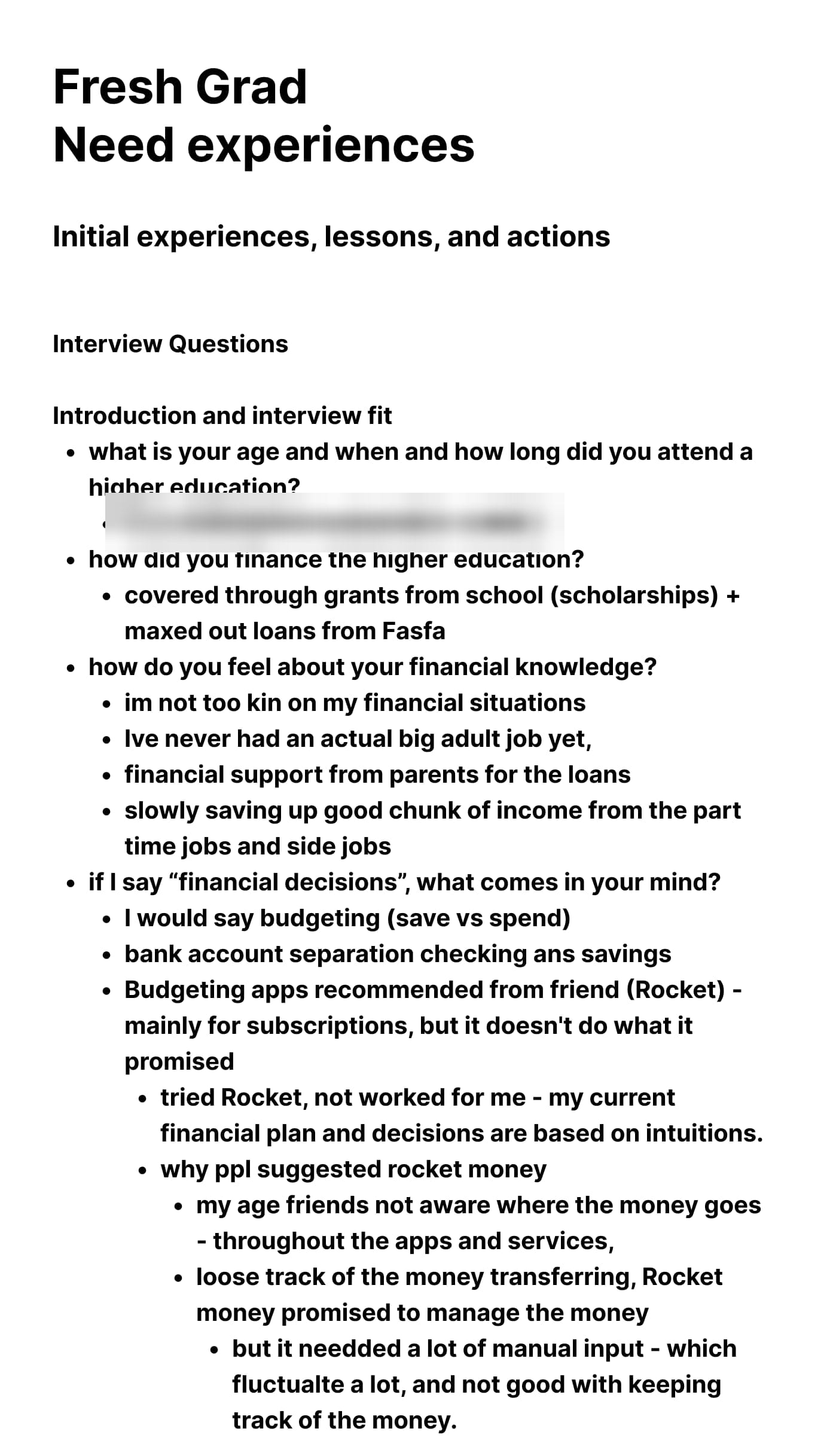
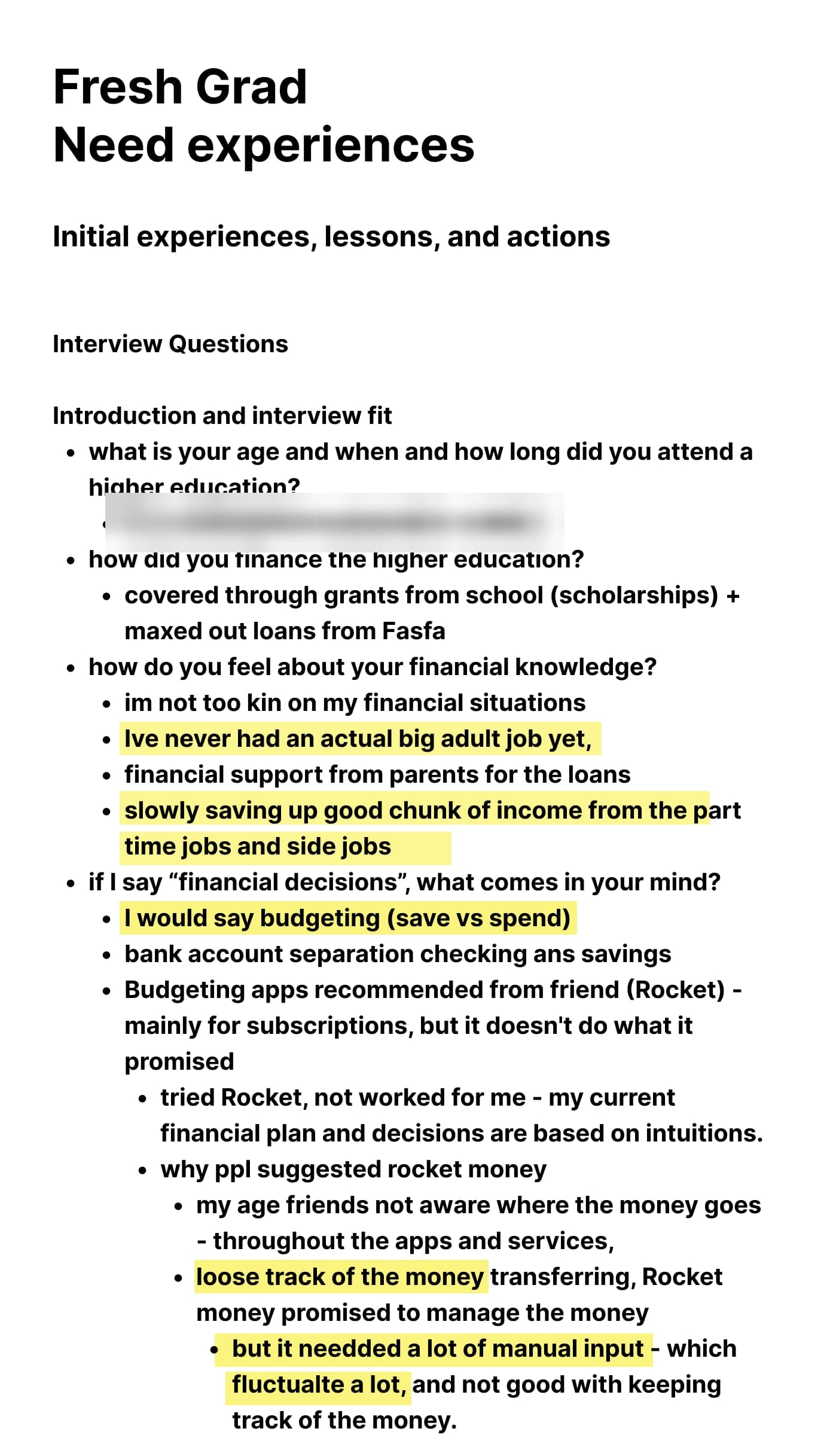

1. Interviews2. Interview notes3. Highlight key findings4. Insights5. All interviews
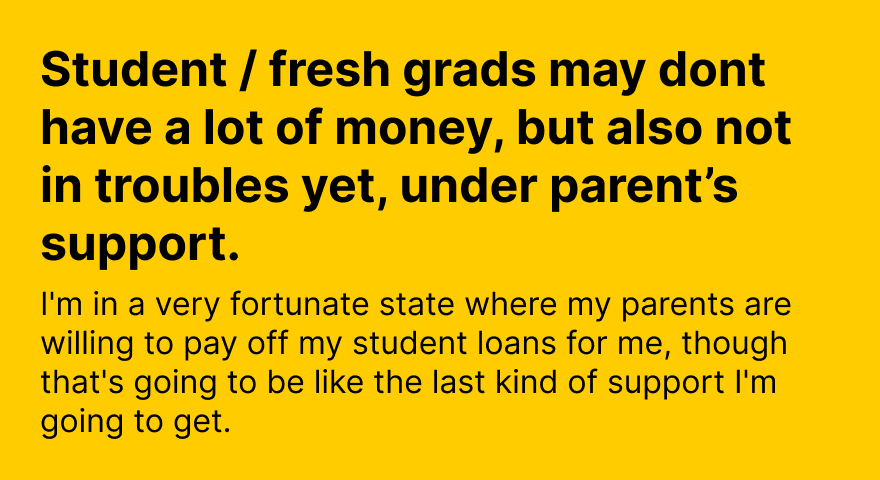
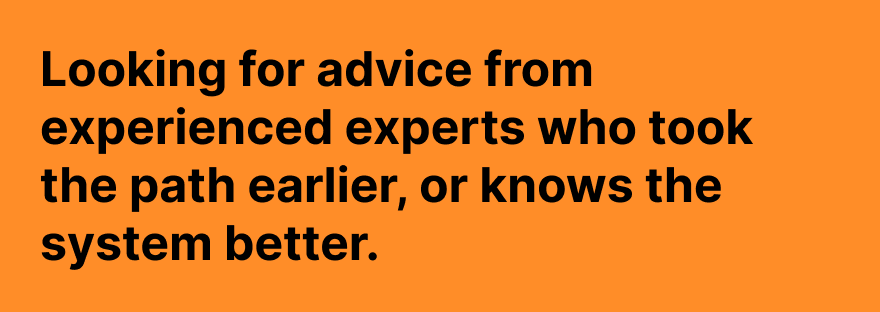
From there, I chose to design for one participant's problem. Interviewee 02 was carrying credit card debt and did not understand the minimum payment, which was the most concrete problem I heard and the most costly.
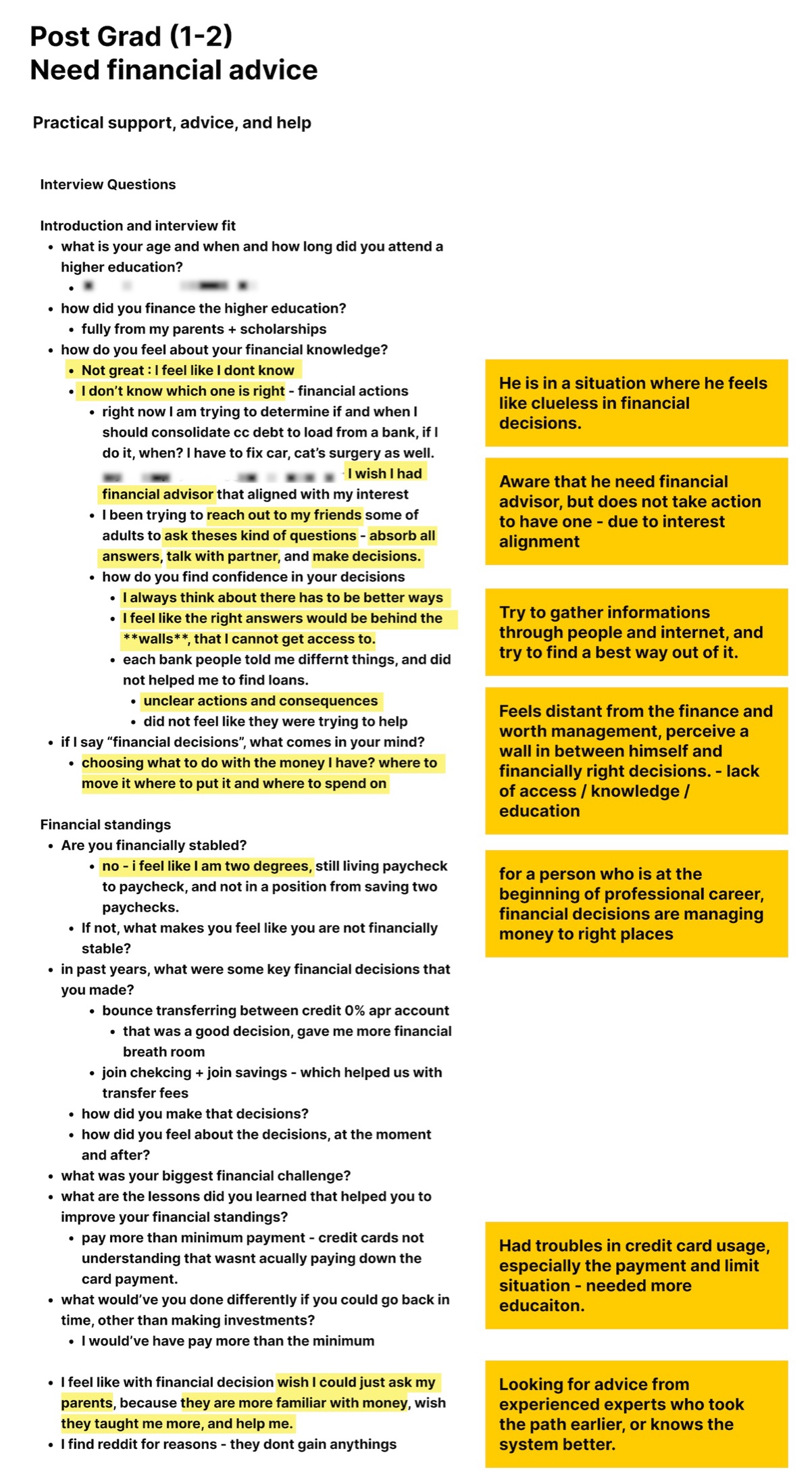
I wish I just had a financial advisor that actually had my best interest in heart.
That sentence changed what I was designing for. General information about credit cards is public and abundant. What was missing was information about this one account at the moment of paying. Nothing was watching the balance and saying what a given choice would cost.
The Approach
The core idea is proactive support rather than answers on request. The assistant monitors the account continuously, flags issues as they emerge, and supplies the information needed to work through them, while the person still decides.
- Spending adds up
Nothing is watching the balance.
- Blind mid-month
Purchases show, but not where the month is heading.
- A payment, after the bill
The month has closed, and no option shows its cost.
- Spending adds up
Zeto reads the pace as it happens.
- The month-end is projected
The balance is known before it lands.
- A red flag, mid-month
Raised while there is still time to act.
- A priced payment
Each option shows its cost before paying.
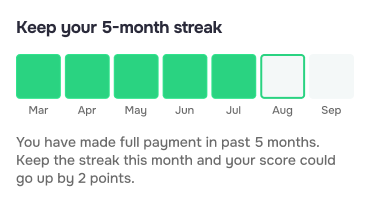
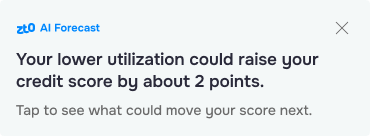
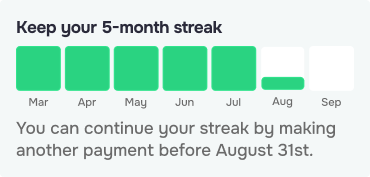
Each feature on the screens below answers one of the three gaps. The forecast and the priced options give information about the account, and the suggested amount is worked out from its own balance. The streak and the score forecast make slow progress visible, which is where confidence comes from.
I kept the navigation conventional on purpose. Anyone already used to a banking app should be able to onboard and start exploring without relearning anything, so the only unfamiliar part is how the assistant behaves.
The Journey
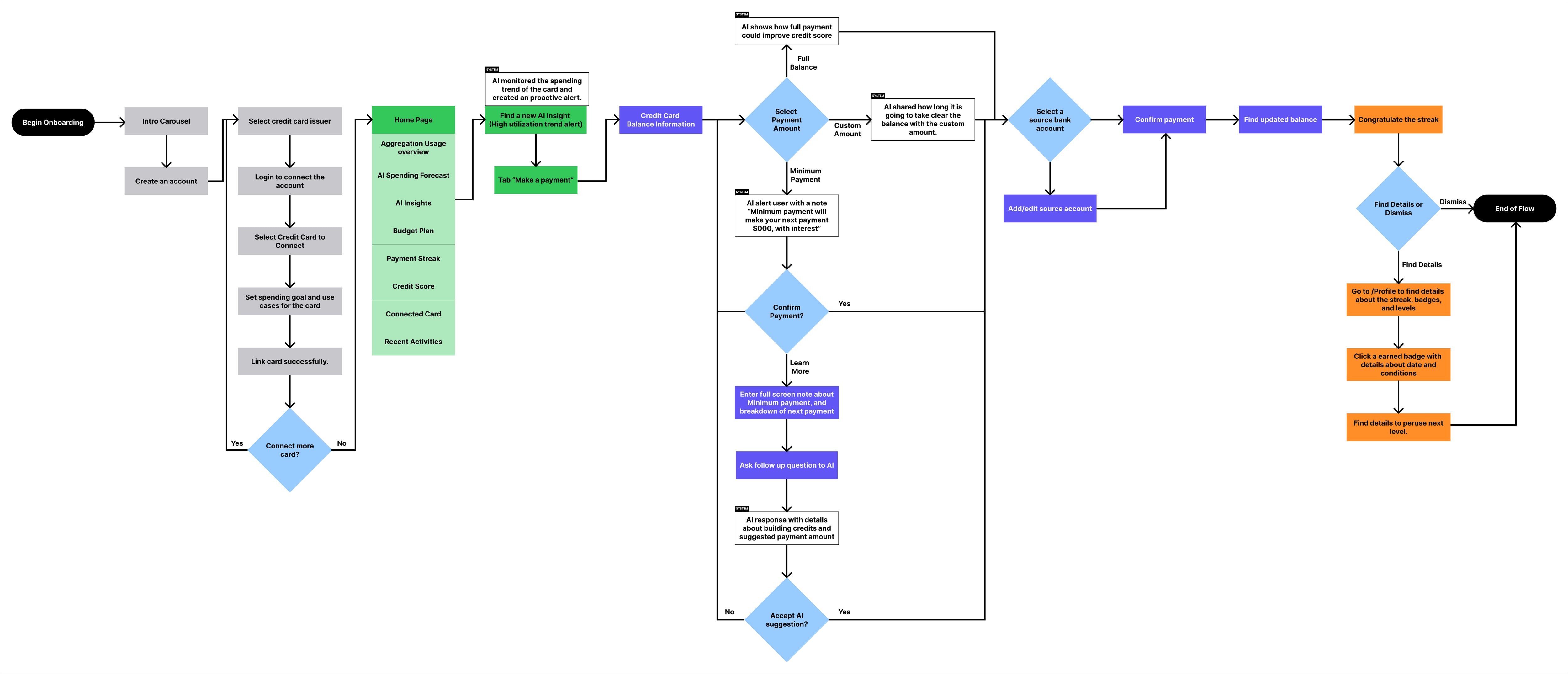
The journey runs in four parts. Setup comes first, so nobody arrives at an empty app, and the service can be explored before any commitment. Home holds the forecast and is where the alerts appear. Payment is where the idea has to hold up. Profile collects the streaks, badges, and levels, because a month of better payments is too small a change to notice on its own. The screens that follow go deepest on Home and Payment, and Setup and Profile appear in the map.
01
Setup
Information, preferences, and card connections.
02
Home
The financial vitals, and where the proactive alerts appear.
03
Payment
The decision, priced option by option.
04
Profile
Streaks, badges, and levels that make slow progress visible.
The Product
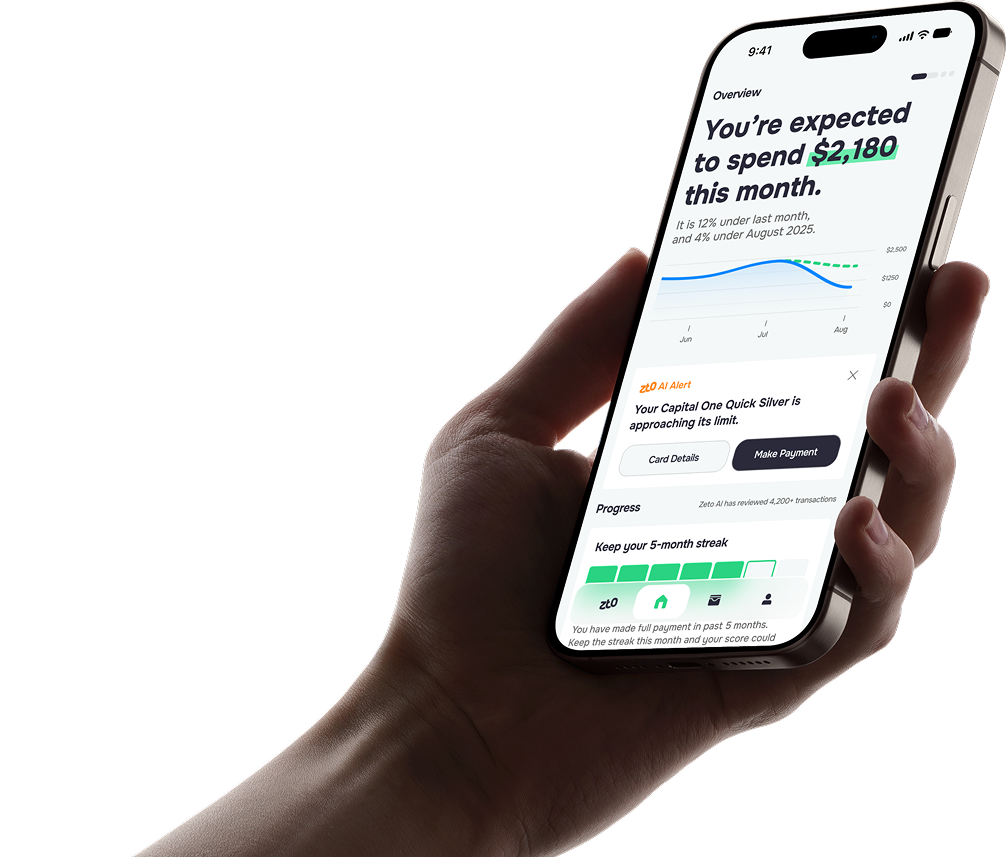
The name Zeto comes from zero to one. It is an AI credit card advisor for the start of a financial life, the stage this research focused on. The wordmark writes the name with a numeral zero, zt0, and its green is the same green as the assistant's suggestion on the slider and each kept month in the streak.
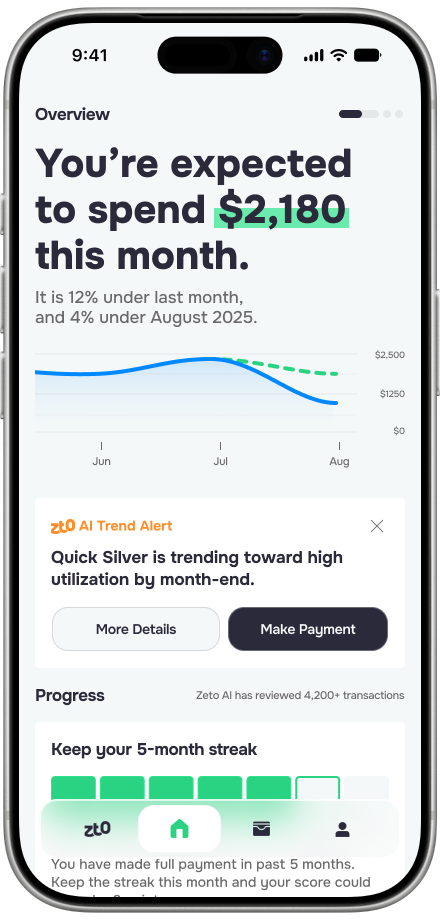
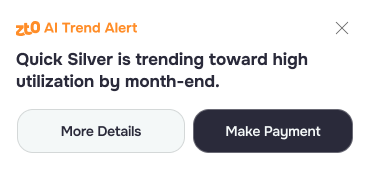
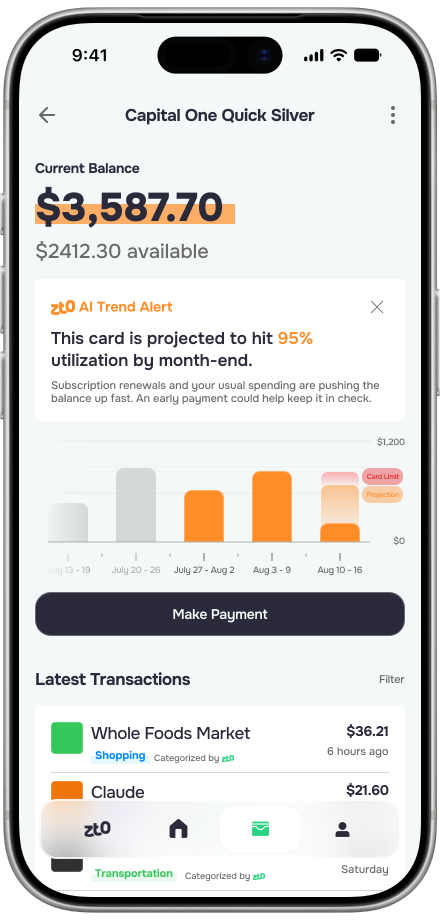
The home screen leads with where the month is heading, set against the two months before it, so the number arrives while there is still time to act on it. The alert sits under the forecast. Spending can be down overall while one card runs high, as it is here. The month is 12 percent under July, and the Quick Silver card is still heading for high utilization.
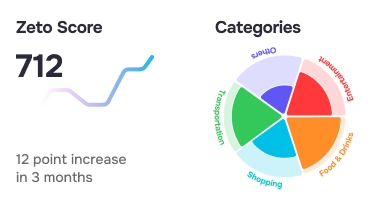
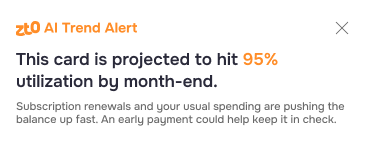
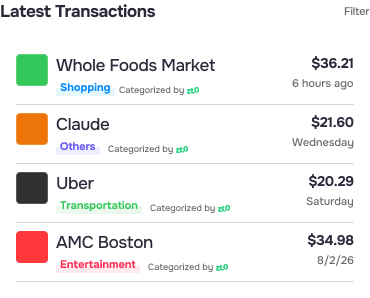
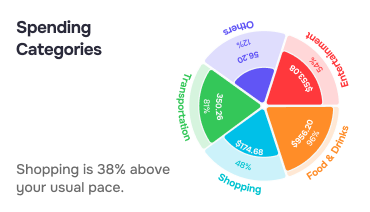
The card detail page holds the record behind that alert. Every transaction is categorized automatically, so nothing needs tagging, and a category running ahead of its usual pace is named. Here, shopping is 38 percent above its pace, and the assistant projects the card at 95 percent utilization by the end of the month.
On the payment screen, a slider stops at four points, which are the minimum payment, the assistant's suggestion, the statement balance, and the full balance. Each stop changes the message beneath it, so the cost of a choice appears before the payment instead of on a later statement. The slider below plays through its stops on its own, and any stop can be selected.
Make Payment
Minimum Payment
$104.61
out of $3,587.70 total balance · 22.99% APR
The minimum payment is the most supported path, on purpose. I built it that way because the project came from someone carrying card debt without understanding what the minimum does. It would have been easier to discourage the minimum and move on. Explaining it is the harder and more useful thing.
Tapping the warning opens Zeto AI on the mechanism behind it. It explains what a minimum payment is, and why paying only that amount keeps the account in good standing while the debt keeps growing. The explanation lists its sources, here Citi.com and Experian, so the reasoning can be checked rather than taken on trust, and the panel states that the assistant can make mistakes.
The natural next question is the one the interview raised. What happens if I only pay the minimum? The answer works it through, with how many months the balance takes to clear and what it costs in interest, set against a fixed monthly payment. It ends in a button that moves the slider to that amount, so the decision is made without leaving the flow, and confirming the payment is still the person's step.
zt0 Zeto AI
| Ask Zeto AI
Zeto AI is an artificial intelligence and can make mistakes.
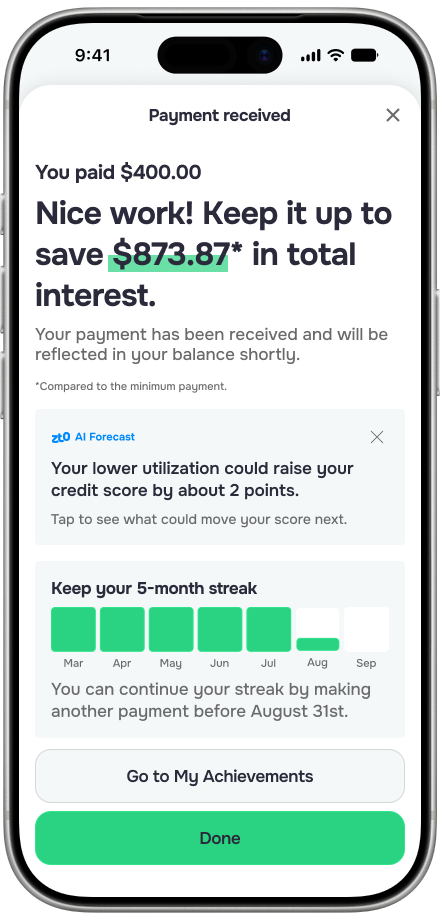
After the payment clears, the confirmation states the interest saved, forecasts the effect on the credit score, and names what the streak needs next.
Learnings
One interview shaped the design more than all of the synthesis around it. The community threads and the four career stages showed where to look. One participant who did not understand the minimum payment showed what to build.
A system that monitors an account and raises problems unprompted is one step away from one that nags. The rule I designed to, that every intervention states a number and then stops, only holds if how often the assistant speaks is designed as well, and I did not get to that.
What is still untested. This is a concept, and it was never put in front of the people it was researched with. The open question is whether a consequence priced in dollars changes behavior, or whether it becomes one more number to dismiss. Several things the design depends on were not designed or tested either. I did not work out what the assistant says when its forecast turns out wrong, how often an alert can fire before it becomes noise, or what consent connecting a card asks for. I also do not know whether the terms statement balance and full balance mean anything to someone who did not know what a minimum payment does. Only testing would settle them.